Credence by Penelope Douglas: Uncharted Desires and Captivating Forbidden Passions
Hello, my dazzling lit ladies! I’ve just closed the cover on a fantastic read—let’s talk about it! Credence by Penelope Douglas is a standalone novel that ventures into the uncharted territories of unconventional romance, with a narrative that blurs the lines between love, obsession, and power dynamics. It’s a book that stands apart in its genre, exploring taboo themes and pushing boundaries in a way that only Penelope Douglas can.
Trigger Warning:
Warning: This book contains discussions of sensitive and potentially triggering topics such as sexual content, manipulation, abuse, and unconventional relationships. Reader discretion is advised.
Initial Impressions of Credence By Penelope Douglas
At first, Credence by Penelope Douglas takes its time to build momentum. The slow burn might leave you unsure of where the story is heading, but as the layers begin to unfold, the depth of the characters and their relationships start to captivate. Although it wasn’t as spicy as I initially expected, it soon became clear that the novel wasn’t just about the physical connections—it was about the emotional journey of Tiernan de Haas.
Tiernan’s relationship with her parents is particularly heartbreaking, and Douglas explores this with a delicate touch that brought tears to my eyes at several points. The pain of her loneliness and the weight of unresolved grief linger throughout the story, making her journey all the more poignant. When the story delves deeper into her relationships, it’s both surprising and emotionally charged, challenging Tiernan’s boundaries in ways that feel both gentle and profound.
The book gently pushes against societal norms and taboos, but it does so with a softer edge, lacking the darker, grittier elements found in other recent reads. This shift in tone makes Credence a more tender love story, focusing on healing and growth rather than just shock value. The ending, which is not what I expected, leaves a lingering sense of yearning, making you wish there was just a bit more to explore. Despite its slow start, Credence by Penelope Douglas blossoms into a lovely and unexpectedly moving narrative, offering an emotional depth that stays with you long after the final page.
Plot Summary:
In Credence by Penelope Douglas, we are introduced to Tiernan de Haas, a young woman who is abruptly thrust into a new and disorienting reality after the tragic death of her parents. Faced with the loss of her family and the upheaval of her life, Tiernan finds herself relocated to a remote mountain estate in Colorado. There, she moves in with her father’s stepbrother and his two sons, whom she doesn’t know.
As Tiernan adjusts to her isolated surroundings, the stark contrast between her previous life and her current situation becomes glaringly evident. The mansion, secluded and enveloped by the rugged wilderness, provides a dramatic backdrop for the unfolding story. The isolation intensifies the emotional and psychological stakes, making every interaction and relationship even more significant.
The heart of Credence by Penelope Douglas revolves around Tiernan’s complex and evolving relationships with the three men she now lives with: Jake, the stepbrother, and his sons, Noah and Kaleb. Each of these men presents a unique challenge to Tiernan, pushing her to confront her own desires, fears, and boundaries. As she navigates these relationships, she experiences profound personal growth and encounters situations that test her limits and challenge her perceptions of what is acceptable.
The story unfolds as a deep exploration of forbidden desires and the nuances of personal evolution, all set against the backdrop of a secluded and dramatic setting. The novel examines the consequences of pushing beyond societal norms and the impact of these experiences on Tiernan’s journey towards self-discovery.
Character Development:
In Credence by Penelope Douglas, the development of characters is intricately woven into the fabric of the story, focusing on Tiernan’s transformative journey and her complex relationships with Jake, Noah, and Kaleb.
Tiernan de Haas starts as a sheltered, emotionally distant young woman, but her character undergoes significant evolution. Orphaned and thrust into a new, isolating environment, Tiernan’s journey is one of profound self-discovery. Her interactions with Jake, Noah, and Kaleb push her to confront her deepest fears and desires. As she navigates these relationships, Tiernan transitions from a passive observer of her own life to an empowered woman who begins to understand and embrace her true self. Her growth is intense and compelling, as she learns to reconcile her emotional needs with the complexities of her new reality.
Jake, the stepbrother of her father, begins as a figure of stability and authority. Initially, his role seems straightforward as he assumes responsibility for Tiernan. However, as the story progresses, Jake’s character reveals deeper complexities. His protective instincts towards Tiernan are tempered by his own emotional struggles and moral dilemmas. As he grapples with the responsibilities of his role and his evolving feelings for Tiernan, Jake’s character becomes more nuanced. His development involves confronting his own limitations and ethical boundaries, adding layers of depth to his relationship with Tiernan.
Noah, the rebellious younger son, is characterised by his loud and sexually active nature. His personality is a stark contrast to the more reserved aspects of Jake and Kaleb. Noah’s vibrant and often disruptive presence challenges Tiernan’s emotional boundaries and forces her to confront her own desires and fears. His loud and defiant behaviour brings a sense of chaos into her life, creating both conflict and excitement. As the story unfolds, Noah’s character evolves, revealing the motivations behind his rebellious behaviour and the impact of his actions on Tiernan’s journey.
Kaleb, the older son, presents a more guarded and enigmatic figure. Kaleb is notably mute and hasn’t spoken since his Mother went to prison, and often retreats into the woods, maintaining a distance from the others. His muteness and tendency to disappear into nature add an air of mystery to his character. Despite his reticence, Kaleb’s actions and presence significantly influence Tiernan. His guarded nature and elusive behaviour create a unique dynamic, challenging Tiernan to explore her own understanding of isolation and connection. Kaleb’s development reveals a complex mix of vulnerability and introspection, contributing to the overall tension and emotional depth of the narrative.
The relationships between Tiernan and the three men—Jake, Noah, and Kaleb—create a rich tapestry of emotional and psychological complexity. Each man represents different facets of Tiernan’s desires and fears, and their interactions with her explore themes of dominance, submission, and personal growth. The evolution of these relationships is both intense and provocative, making Tiernan’s journey of self-discovery and empowerment a central focus of the novel.
Themes & Messages:
Credence by Penelope Douglas delves into profound and often uncomfortable themes, weaving a narrative that explores grief, isolation, and the intricate dynamics of power and desire within relationships.
The novel opens with Tiernan de Haas, who has recently lost her parents and is thrust into a new and unfamiliar environment with her father’s stepbrother and his two sons. This upheaval underscores the theme of grief and isolation, as Tiernan struggles to adjust to her new life in the remote mountains of Colorado. Her journey is not only one of physical relocation but also of emotional displacement, reflecting her deep sense of loss and disconnection from her previous life.
Kaleb, the oldest son, embodies a theme of abuse and trauma. His character is defined by his guarded nature and tendency to retreat into the woods, behaviours that stem from his painful past with his mother. The abuse Kaleb endured profoundly affects his interactions and relationships, creating a complex character whose emotional and psychological scars are central to the story. His muteness and withdrawal are symbolic of his struggle to cope with his traumatic experiences, adding layers of depth to his character and highlighting the theme of emotional and psychological damage.
Jake, the stepbrother, is portrayed as a single parent responsible for the care of his two sons and Tiernan. His role introduces themes of parental responsibility and personal struggle. As Jake navigates the challenges of raising his children while managing his own moral and emotional conflicts, his character brings attention to the difficulties of balancing care and authority in the face of complex family dynamics. His evolving relationship with Tiernan reflects his struggle to maintain boundaries while offering support, making his character a focal point for examining the theme of family and responsibility.
Noah, the youngest son, represents the theme of rebellion and the search for identity. His loud and sexually active nature introduces chaos into Tiernan’s life, challenging her to confront her own desires and boundaries. Noah’s character also highlights the impact of his turbulent behaviour on his relationships with those around him, including his family. His journey is one of self-discovery and resistance against the constraints imposed by his family and his environment.
Together, these characters and their interactions illustrate the novel’s exploration of power dynamics and desire. The relationships between Tiernan, Jake, Noah, and Kaleb are fraught with tension and complexity, examining themes of dominance, submission, and emotional healing. Douglas’s unflinching portrayal of these themes challenges readers to confront uncomfortable truths about morality and human behaviour, questioning societal norms and exploring the grey areas of love and desire.
In essence, Credence is a provocative and thought-provoking exploration of the darker facets of human experience, pushing boundaries and inviting readers to reflect on the nature of grief, trauma, and the complexities of relational dynamics.
Writing Style & Tone:
Penelope Douglas’s writing in Credence is a masterful blend of raw emotion and poetic prose, perfectly suited to the heart-wrenching narrative that unfolds. From the very beginning, Douglas sets a tone that is both tender and aching, immersing the reader in the deep loneliness and pain that defines Tiernan’s journey. The pacing is deliberate, allowing the story to breathe as it explores the complexities of grief, love, and self-discovery.
As the narrative progresses, the emotional intensity grows, pulling you deeper into the lives of the characters. Douglas’s prose is evocative, painting vivid images of the remote Colorado mountains and the secluded life Tiernan is thrust into. Her ability to convey the weight of unspoken words and hidden desires is particularly striking, making each interaction between the characters feel charged with meaning.
While the story gently nudges the boundaries of taboos, it does so with a sensitivity that makes the exploration of these themes feel natural rather than jarring. Unlike many dark romances that delve into the unsettling, Credence maintains a balance, focusing on the tenderness and the healing that comes from connection. The tone is not one of darkness, but of deep emotional resonance—a reflection on the beauty that can emerge from pain and the comfort found in unexpected places.
Credence by Penelope Douglas invites you to feel every moment of Tiernan’s journey, from her initial isolation to the gradual awakening of her desires and the complexities of her relationships with Jake, Kaleb, and Noah. It’s a story that tugs at the heartstrings, capturing the ache of loneliness but also the warmth of love and the promise of hope. By the time you reach the end, you’re left with a lingering sense of longing, captivated by the beauty of a story that gently pushes boundaries while remaining deeply grounded in the emotional truths of its characters.
Emotional Impact:
Credence by Penelope Douglas is a masterclass in evoking a wide spectrum of emotions, taking the reader on a journey that is as heart-wrenching as it is heartwarming. Credence by Penelope Douglas made me cry, laugh, love, and even loathe at different moments, each emotion hitting with a depth that I wasn’t fully prepared for.
The story’s exploration of abuse, particularly through Kaleb’s backstory, was profoundly painful, stirring a deep empathy and sorrow that brought tears to my eyes. The raw portrayal of his suffering and the lasting impact it had on his character was both heart-breaking and haunting, leaving me with a lingering ache long after the scenes had passed.
Yet, amidst the pain, there were moments of tenderness that offered a comforting balm. The gentle, loving interactions between the characters—those unexpected instances of kindness and connection—stirred deep feelings of warmth and affection. I found myself laughing at Noah’s rebellious antics and the way they contrasted so sharply with the more serious, heavy moments of Credence by Penelope Douglas. His light-heartedness brought a much-needed balance to the darker themes, providing a sense of relief that made the story all the more enjoyable.
The novel also made me love deeply—the way it portrays the complexities of relationships, the messiness of human emotions, and the beauty in finding love in unexpected places. But it didn’t shy away from making me loathe certain actions and decisions, challenging my own moral compass as I navigated the intricate power dynamics and taboo elements within the story.
In the end, Credence left me feeling a whirlwind of emotions, from the intense pain of confronting difficult truths to the comforting satisfaction of a story well told. It’s a novel that doesn’t just ask you to read it; it demands that you feel every word, every moment, every heartbeat of its characters.
Critical Analysis:
Credence by Penelope Douglas shines in its character development and nuanced exploration of complex themes, but it may prove challenging for some readers due to its bold and explicit content. The relationships portrayed are intricate and can be unsettling, as they navigate morally ambiguous territory that might not appeal to everyone. However, for those who appreciate unconventional romance with a deeper emotional core, Credence offers a thought-provoking and daring narrative that pushes boundaries while remaining emotionally resonant. Despite its intensity, the novel delivers a captivating exploration of love, desire, and the complexities of human connection.
Conclusion:
Credence by Penelope Douglas is a novel that lingers with you long after the final page. It’s a bold exploration of love, loss, and the intricate dynamics of human relationships, all wrapped in a narrative that is both heart-wrenching and beautifully tender. At its core, the story delves into the complexities of desire and the ways in which our deepest fears and longings shape our connections with others.
The novel starts off as a slow burn, gradually pulling you into Tiernan’s world as she grapples with her grief and the isolation that comes from moving in with her father’s stepbrother after her parents’ tragic passing. While the pacing initially felt slow, this deliberate build-up allows the characters to develop organically, and the relationships to unfold with a depth that is both realistic and captivating. As the story progresses, it gently nudges the boundaries of what’s considered acceptable, exploring themes of power dynamics and taboo relationships, but always with a touch that is more tender than dark.
The relationship between Tiernan and her parents is particularly heartbreaking, with moments that had me on the verge of tears as the layers of their past are revealed. Kaleb’s character, especially, adds a profound emotional weight to the story. His journey from a guarded, mute presence to someone whose pain and vulnerability are slowly uncovered is both intense and deeply moving. The themes of abuse and healing in Kaleb’s backstory, alongside Jake’s struggles as a single parent and Noah’s rebellious nature, create a rich tapestry of emotional experiences that makes Credence by Penelope Douglas feel incredibly human and relatable.
While Credence doesn’t have the dark edge that I’ve encountered in some of my recent reads, it offers something equally compelling—a love story that is raw, aching, and ultimately comforting. The ending, though unexpected, leaves you wanting more, not because it lacks closure, but because the characters and their journeys are so captivating that you’re reluctant to let them go.
In conclusion, Credence by Penelope Douglas is not just a romance novel; it’s a deep dive into the human psyche, exploring the ways in which we cope with loss, seek comfort, and ultimately find love in the most unexpected places. It’s a must-read for fans of Penelope Douglas and for anyone who appreciates a romance that pushes boundaries gently yet effectively, without veering into the overly dark or unsettling. The novel is a testament to Douglas’s skill as a storyteller, offering a beautiful, emotionally resonant experience that will stay with you long after you’ve finished reading.
Rating:
- Plot: ★★★★☆
- Characters: ★★★★☆
- Writing Style: ★★★★☆
- Overall Impact: ★★★★☆

Favourite Quotes:
- Credence. I’m close enough to read it now. It means ‘belief as to the truth of something’.
- “You’re not lost. You just need someone to find you.”
- “Sometimes, the wrong choices bring us to the right places.”
- “Sometimes the darkest places reveal the most about ourselves.”
- “In the silence of isolation, we find our truest desires.”
Discussion Points:
- How do you feel about the portrayal of taboo relationships in Credence?
- Do you think Tiernan’s decisions were influenced by her grief and isolation?
- How does Credence challenge traditional ideas of romance and morality?
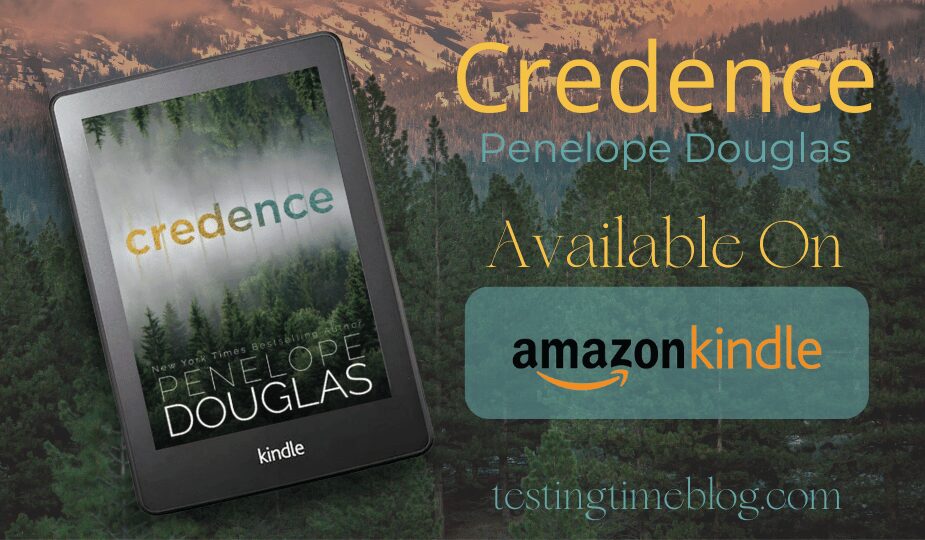
Currently, Credence by Penelope Douglas is available on Amazon Kindle Unlimited – You can get a free 30-day trial by clicking here.
I purchased Credence by Penelope Douglas myself, or read this through Amazon Kindle Unlimited and the following review reflects my personal thoughts and experiences with the book.
As an Amazon Associate, I earn from qualifying purchases. Please note that links included within this post include Amazon Affiliate links and I earn a small commission for purchases through these links.
Why not check out more Erotic Fiction and similar books I have reviewed. Until next time book babes xo…


You May Also Like

Turning A Spare Room Into A Modern Office

Which Sunscreen Should You Use