Choosing the Right Sink for Your Bathroom – Undermount, Vessel & More
Bathroom sinks come in various shapes, styles, and materials. A skilled designer or home center employee can assist in selecting one that will best fit your space and style, but below are a few of the most popular styles around and for good reason!
Bathroom sinks come in various shapes, styles, and materials at your local bathroom warehouse. A skilled designer or home center employee can assist in selecting one that will best fit your space and style, but below are a few of the most popular styles around and for good reason!
Undermount
No matter whether you’re remodeling your bathroom or simply replacing an old sink, installing an undermount sink will elevate both its aesthetics and resale value. They make a lovely addition to any vanity and are available in an array of colors and shapes to meet every style imaginable, but when selecting an undermount sink, it is important that certain details be considered carefully.
Before purchasing an undermount sink, ensure it will work with your faucet. Since they’re mounted beneath your countertop, these bathroom sinks require a cutout that fits their lip while still offering an aesthetic appearance, so having a professional measure the counters and sink opening is key to a successful installation.
Consideration must also be given when selecting an undermount sink’s material, with porcelain being one of the more popular choices. Cleaning porcelain in a bathroom using an undermount sink is easy thanks to its being non-porous and easy to wipe clean. Though bleach may stain it, it may be best to opt for natural cleaners like dish soap and vinegar as alternatives.
Undermount sinks tend to be less modular and universal than drop-in ones, making replacement more challenging in the future. To reduce this hassle, select quality products that complement your countertops’ color and a compatible faucet. Also pay attention to size and depth considerations; choosing the ideal undermount sink ensures leak free usage without water damage to countertops.

Drop-in
Bathroom sinks are an integral purchase that should be carefully considered in terms of style, cost and resale value. Most homeowners tend to select drop-in sinks when selecting their sink type; however, there are plenty of other choices depending on your personal taste and budget.
Drop-in bathroom sinks, commonly referred to as “overlay sinks”, rest on top of countertops and are secured using caulking to create a watertight seal. They’re one of the most popular sink styles due to their affordable pricing and compatibility with nearly every countertop material; installation can even be accomplished quickly for DIY home improvement enthusiasts who can upgrade their bathroom quickly without professional help.
Due to their design, this sink type can fit seamlessly with both modern and traditional interior styles. Made of porcelain or enamel material (as seen here), they come in different finishes suitable for different budgets. Ceramic or enamel are less expensive options when choosing their finish than other options, making this an excellent budget option.
Drop-in sinks present one major drawback – cleaning them can be challenging due to their wide rim that collects dirt and debris. A high-quality faucet with a pullout sprayer will make cleaning your drop-in easier.
Drop-in sinks also present several downsides for those with limited counter space, as their rim can encroach onto the countertop and encroach onto their personal space. These sinks may crack over time when exposed to heat or moisture – something a drop-in does not suit well for stone or quartz countertops.
Vessel
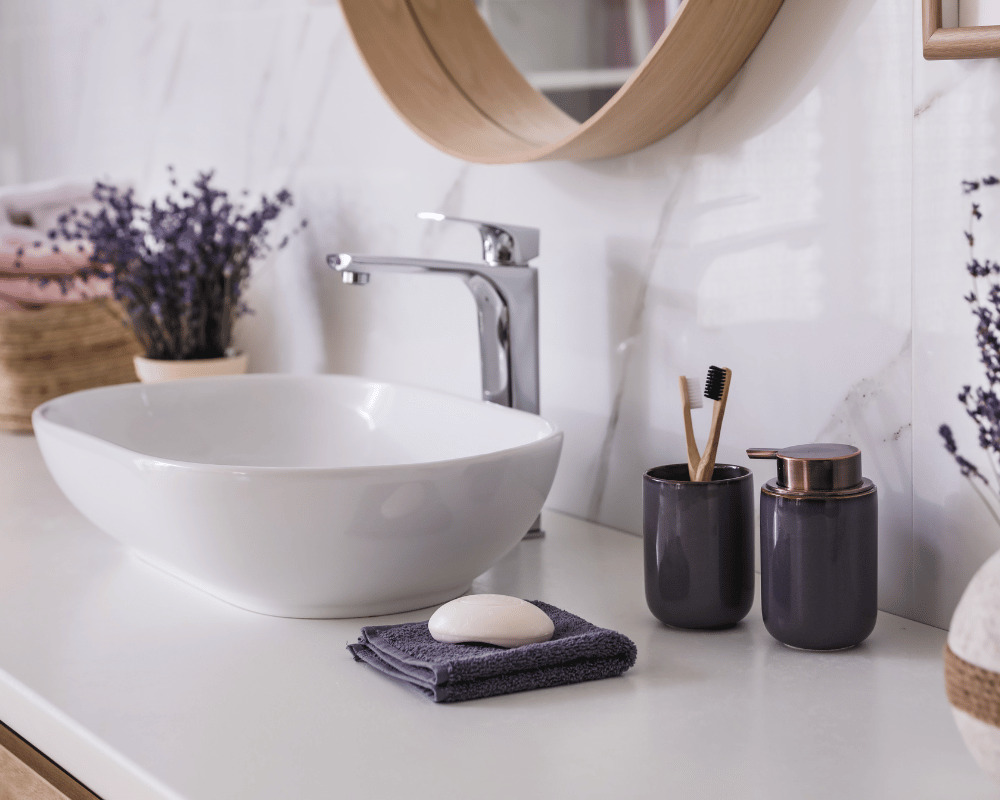
Vessel sinks resemble deep bowls mounted atop your bathroom counter and are an aesthetically pleasing style suitable for modern or traditional bathrooms alike. Installation of these types of sinks is straightforward, and they come in various shapes, sizes, materials, and styles, so selecting one depends upon a combination of aesthetics, functionality, and plumbing cutouts in your countertop.
Some vessel sinks have an overflow hole to help prevent water damage to your countertop, while others may require special faucets for installation. When choosing your sink, it is essential that it matches both your bathroom style and can be fitted with your preferred type of faucet.
Natural Stone
Natural stone sinks have long been popular choices among homeowners looking to design an unforgettable bathroom experience. Their timeless beauty makes them an easy choice, with various colors and textures available, finding something to complement the design of your bath should be no problem.
Unlike porcelain or ceramic options, natural stone is much more durable and resistant to high or low temperatures, humidity, pests, or other destructive forces than its counterparts, which means homeowners don’t need to worry about its durability being damaged over time by high or low temperatures, humidity fluctuations, pest infestation, or any other destructive forces!
Fixtures should always be kept in mind when selecting a vessel sink, as many require special faucets that extend over the edge and into the counter. Most vessel-listed sinks will have instructions for mounting, so you should easily find something suitable for your bathroom design. If unsure, consult with either your plumber or the manufacturer of your sink for advice.
Wood
Have you experienced the tranquil and luxurious feeling of entering a spa bathroom with softly glowing wood walls and two sink vanities? Increasingly popular among homeowners, this style blends warmth with luxury to create stunning bathroom spaces.
Solid wood vanities come in all kinds of materials, but oak is typically preferred due to its sturdy structure and resistance against moisture damage and warping. Other durable options include maple and birch. Birch has an even color and texture that can be stained to match any design scheme; however, its porousness means it may create an uneven look after being stained.
If the maintenance or cost of solid wood is prohibitive for you, plywood can provide another excellent choice for a vanity. While lacking the natural beauty of solid wood, plywood resists humidity better and can be repaired easily if necessary; just make sure that the label reads “solid” rather than just “plywood.”
Reclaimed wood vanities are becoming an increasingly popular option for bathroom vanity projects (https://www.pinterest.com/jcbolivia/rustic-bathroom-vanities/). From dilapidated barns upstate that have been given new life as bath vanities to recycled old fences and railroad ties repurposed as vanity tops, this material adds character and history to any space it graces. Reclaimed wood usually displays deeply textured surfaces featuring wear marks or holes unique to each piece that make each one truly one-of-a-kind.
Reclaimed wood can also be painted to match your bathroom decor, provided you use quality paint that resists moisture and humidity. If you prefer keeping its natural hue intact, using a clear polyurethane coating would be best.


You May Also Like

Engagement Ring Without a Diamond

Where Do Your Diamonds Actually Come From?