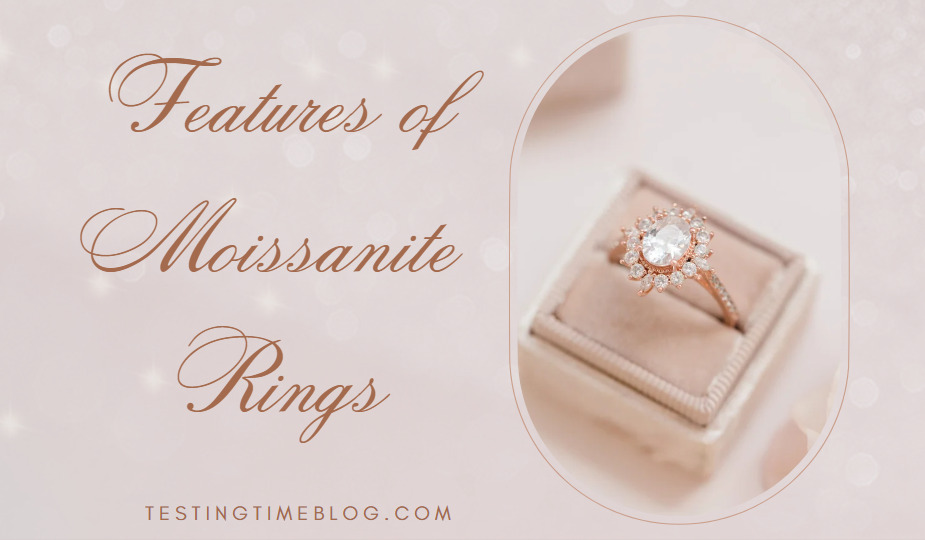
Features of Moissanite Rings
Moissanite is a gem that looks very similar to diamonds but has some unique qualities. It is a very durable stone, second only to diamond on the Mohs hardness scale.
Due to its durability, it is an excellent choice for everyday wear as an engagement ring. Moissanite also doesn’t become cloudy over time.
Micro Pave Setting
If you’re searching for a ring that shimmers and shines – with or without your center stone – look no further than a micro pave setting. This type of engagement ring setting showcases several small diamonds meticulously placed on the ring’s shank and basket, creating a stunning glitter effect.
The beauty of micro pave moissanite rings is that they show off the gem’s brilliance while complementing its shape and color. Moissanite has a unique sparkle that is more “fire” than diamond, producing larger flashes of color when light hits it. This reflects off the ring’s many facets, making it shimmer and shine in a way impossible with a traditional diamond.
Because of this difference in sparkle, a moissanite ring can be used as an alternative engagement ring for those who aren’t comfortable with the violence associated with the diamond industry or just want to stray away from the Hollywood convention that tells us all engaged rings must be made from diamonds. However, choosing the right setting is just as crucial for a moissanite ring as it is for a traditional one.
When looking at a ring, you can usually distinguish pave, and micro pave settings by the diamonds’ size and number. The difference is that a micro paves setting typically features smaller diamonds, which allow jewelers to create more intricate designs and add more diamonds for a lower cost.
It’s also worth noting that the stones in a micro pave setting can be lab created or ethically sourced. Traditionally, natural diamonds have had to be mined from the earth, and this process can often lead to human rights abuses and environmental issues.
Split Shank Setting
Many people need clarification on the number of gemstone options when choosing an engagement ring. Others prefer more sustainable gems. One is moissanite, a crystal-like silicon carbide resembling diamonds. It is also challenging, making it a perfect choice for heirloom-quality jewelry.
Various cuts of moissanite allow a wide range of styles to be created. However, they look best in shapes that hide their color, such as the round brilliant cut and princess cut. They also pair well with other diamond simulants, such as cubic zirconia (CZ).
The shank is the ring’s lower portion that encircles the finger and is in contact with it. Regular inspection ensures it stays in good condition, as wear and tear can cause damage over time. If you notice a crack or scratch, you should have the ring remounted immediately. Moissanite is strong enough to resist damage and scratches but can still be weakened by impact or excessive force.
If you want to avoid damaging your ring, it’s best not to wear it during heavy activities. Removing it before sleeping or using a household product that could damage the stone is also essential. Finally, getting your ring remounted once every five years is a good idea.
Although moissanite can occur naturally, they are rare and have a limited supply. This is why most people purchase a synthetic, lab-grown gem when purchasing a moissanite ring. Lab-grown moissanite is made from silicon carbide, which cannot be found in nature in sizes large enough to make a 1-carat stone.
Halo Setting
The halo setting is a new classic that amplifies the beauty of a center stone. The ring features a delicate circle of smaller diamonds surrounding the center stone, creating a stunning visual effect. Halo rings are trendy amongst young brides looking to add a touch of sparkle to their engagement rings. They also make the center stone appear more significant, which is a great option for those with petite hands or those who want to avoid an overly large ring.
The halos can be created in various ways, and the choice comes down to the style that works best with your engagement ring. For example, you can choose a double halo with two rows of pave diamonds or gemstones surrounding the center stone or a triple halo for an even more detailed look.
Another advantage of a halo setting is pairing it with any center stone. Moissanite can be used as a diamond substitute, but it also looks excellent with emerald or asscher-cut diamonds, rubies, sapphires, and other precious gems. If you’re going with a gemstone, you have the bonus of a unique color that will set your halo ring apart from the rest.
Moissanite is hard, abrasion-resistant, and scratch-proof, making it an excellent jewelry material. It also has a higher refractive index than diamonds, which means it will shine brighter. Additionally, moissanite is nearly impossible to discolor, so you won’t have to worry about your halo engagement ring losing its sparkle over time.
While the beauty of a halo setting is undeniable, it’s important to remember that this type of setting can be more expensive than other styles. That’s because more metal is used to support the halos, and the halo itself may be made of more expensive stones than the center stone. Also, simple solitaire or three-stone designs are less versatile than halo settings, so your ring will be more likely to require regular cleaning and maintenance.
*This is a collaboration post

The Science Behind Delta-9 Edibles

You May Also Like

Heartless by Elsie Silver (#2 Chestnut Springs) – A Fiery Love Story of Redemption and Desire

Travelling With A Disability